How old do farm animals get before slaughter?
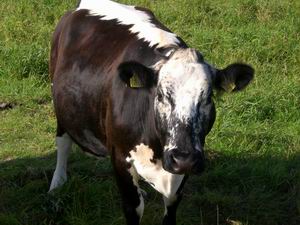
A cow can naturally live to about 20 years. In Dutch dairy farming, hardly any cow reaches that age. A dairy cow has her first calf when she is just over 2 years old, then gives milk for almost 4 years on average and is sent to slaughter: on average at around six years of age. Veal calves are slaughtered before their first birthday.
Source: CRV (Dutch cattle registry), annual figures 2024-2025 (average rearing period 763 days, average 1,423 milking days). Updated 30 September 2026.
We often ask people to estimate the age animals reach before they are slaughtered. The large majority estimate this age to be higher than is actually the case. In the overview of the numbers of farm animals in the Netherlands we also give the age at which each species is slaughtered.
Factory farming: slaughter at peak production
A livestock farmer brings an animal to be slaughtered as soon as it no longer grows or produces, because keeping it longer in the stable costs fodder and lowers returns. In the case of cows, this is the point at which milk production is over its peak. This point occurs at a young age: on average around six years, when the cow has lived less than a third of her natural life.
|
Organic dairy farming: a different approach
Milking cows in organic livestock farming can easily be bred so that they reach their maximum production at a later age. For this purpose, an "organic total breeding fitness level" is maintained, which encompasses 6 characteristics. These characteristics consist for 50% of production characteristics and for the other half of characteristics relating to the constitution (vitality) of the animal.
Late maturity: breeding for longevity
Late maturity of a cow is an important factor. A cow which needs to be kept longer and slaughtered later, will need to develop over a prolonged period. The organic milk value consists of 3 lactation stages (respectively 20%, 30% and 50%) instead of just 1, as is normal in dairy factory farming. Furthermore, persistence is highly valued, because peak productions can lead to a too high yield of concentrates or to prolonged milk fever. A cow that yields 20-25 kg milk, 300 days long, will arrive at an annual yield of 6,500 to 7,000 kg and that on less than 1,000 kg of grain.
Milk speed and animal welfare
Cows are bred to an average milk speed of about 3 kg per minute. High milk speeds lead to udder infections and milk leakage in the cow. This manner of breeding and working in organic dairy farming better guarantees the welfare of the animal and the health of the consumer of dairy products and meat. |
