Freedom as the basis for the relationship between humans and animals |
|
What a young hare teaches us about freedom. Humans and animals do not have to be the same to be of equal worth. A story about trust, about love without possession and about why freedom is a better basis for equal worth than equality. Reading time about 12 minutes.What a hare can teach us about equal worth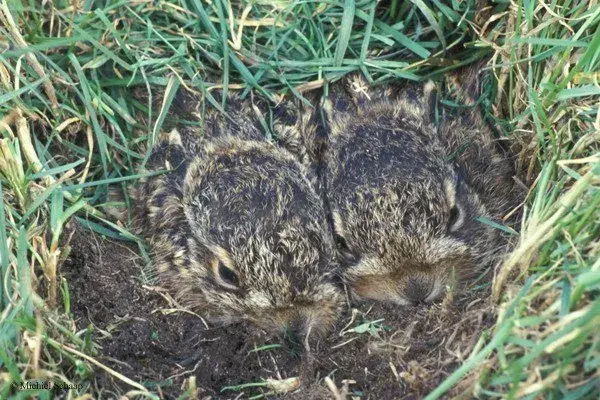 In February 2021, during the lockdown, Chloe Dalton was walking along an unpaved track beside a field near her home in the English countryside. On the track she saw a tiny hare. It was only a few weeks old, not much bigger than her hand. The little animal lay motionless, but was clearly alive. A few minutes earlier Dalton had heard a dog barking. The leveret had probably been chased or picked up and put down again. Dalton faced a dilemma. She could leave the leveret where it was and hope that it would find safety and be found by its mother. She could also pick it up and carry it to the long grass. But that too could go wrong: perhaps the mother would no longer find it or would reject it because of the human scent. Intervening might actually mean harming the animal. She chose to do nothing. She remembered where the leveret lay and walked on. Four hours later she came back. The leveret was still lying in exactly the same spot. By now she began to fear that it had been injured by the dog, that its mother had disappeared or that, in its vulnerable position on the track, it would be run over or caught by a predator. Then she decided to take it home, at first only to look after it until the evening and then bring it back. That turned out to be impossible. A local conservationist told her that a young hare once touched by humans would probably be rejected by its mother. Besides, it was likely to die in captivity. Hares are not animals that are easily raised or domesticated. Dalton thus found herself in a situation she had never sought: precisely because she wanted to save the animal, she had become responsible for it. But from that moment one thought remained decisive: the hare must eventually be able to live in freedom.
And then something unexpected happens. The hare comes back. Dalton does not hold her and does not shut her in, although she does put out food for her. Whether the hare returns out of well-understood self-interest or because something has grown that resembles a bond cannot be said with certainty. Both are words from our own world of experience, borrowed to describe something we do not know from the inside. What does remain is this: she can disappear into the fields at any moment and nothing forces her to come back. The relationship does not arise because the human holds on to the animal, but because she lets the animal go. This raises a question that reaches much further than the story of one woman and one hare. Can there be a relationship between humans and animals that does not infringe on the animal's freedom? I think there can. More than that: I think such a relationship shows what equality -or rather equal worth- really means. Of equal worth in freedomHumans and animals are of course very different. Humans have language, technology and a capacity for abstract thought that other animals do not have in the same way. But it does not follow from such differences that one being has more right to freedom than another. Equal worth does not mean that humans and animals are the same. It means that their differences are no justification for needlessly subordinating the freedom of one being to the interests of another. A human has a right to freedom because he is a living, feeling and acting being. A wild animal has that same right. The form in which that freedom shows itself differs from species to species. For a human, freedom means for example being able to come and go as he pleases, to form relationships and to shape his own life. For a hare, freedom means being able to run, to forage, to rest in its form, to reproduce and to withdraw whenever the animal itself wants to. The right to freedom is therefore not a right to human freedom. It is the right of every living being to live freely according to its own nature. “The essential criterion is not contact or no contact, but freedom or dependence” When contact does not infringe on freedomThis opens up an interesting possibility. Suppose a wild animal seeks out a human of its own accord. The animal comes to sit closer, for instance, walks into the house or voluntarily stays near a human. Should we reject that contact because a wild animal is simply supposed to be wild? If the animal is truly free to come and go, there is in principle nothing wrong with such a relationship. After all, freedom does not mean that you always have to be alone. A wild animal too can be curious, develop trust or come to prefer the company of another being. The essential criterion is therefore not contact or no contact, but freedom or dependence. An animal that seeks contact of its own free will keeps its autonomy. An animal that comes to a human because it has been made dependent on that human for food is in a different situation. That difference is fundamental. When a human feeds a wild animal every day and the animal keeps coming back because of it, it becomes hard to say that the contact is still completely free. The human has then created an artificial relationship of dependence. The animal does not come only because it enjoys the contact, but also because its access to food is linked to it. Freedom therefore does not only mean the physical possibility to leave. Freedom also requires the absence of a need to return that has been created by humans. “The more freedom the hare is given, the more trust grows” The paradox of trustThat is exactly why the story of Raising Hare is so special. Dalton does not try to make the hare dependent on her. On the contrary, she tries to let her lead her own life as much as possible. And then something arises that looks like a paradox: That is a fundamentally different kind of relationship from the one between owner and pet. Not because keeping a pet could not be love, but because it starts from a different premise. With possession the premise is that the animal belongs with the human. Here, with an animal that is wild and stays wild, the premise is exactly the reverse: the animal belongs to no one and is not seen in terms of value. And precisely because of that, the animal can choose to stay. That may even make the relationship purer. The human does not have to hold on to the animal to experience closeness. The certainty that the animal will come back does not come from control but from trust. “I grant you your freedom, even if that freedom means that you leave me” Love without possessionThis brings the story close to the meaning of love, from which we as humans can also learn something among ourselves. Love that takes away freedom threatens to become possession. Whoever says: I love you, so you must stay with me, lets his own need for closeness weigh more heavily than the freedom of the other. With a wild animal this becomes particularly visible, precisely because the animal knows itself bound by no agreement or promise. Love that asks such an animal to exchange its freedom for our certainty of closeness is a different love from love that puts the freedom of the other first. The more difficult form of love is: When the animal then comes back of its own free will, that contact is all the more meaningful. The animal is not there because it has to be. It is there because it wants to be. That may be the deepest lesson of Raising Hare: freedom does not stand in the way of a relationship; freedom makes a truly voluntary relationship possible. What children could learn from animalsPerhaps I could have learned that lesson earlier myself. As a child I had pets. I found animals beautiful and wanted to have them close. Like many other children, I was fascinated by young hares and birds I came across in the fields. I also went fishing. When I look back on that, I see no behaviour that is essentially different from that of many children. Children are curious; they want to touch, care for, hold and discover. A young animal easily prompts the thought: I want to have that. Yet nowadays I think that adults could guide children better in this. Not by curbing their love for animals, but by giving that love a different direction. A child who asks for a rabbit, a guinea pig, a dog or a cat is often really asking for closeness. It wants to care for an animal, play with it and get to know it. The obvious response of adults is then to judge whether the family can cope with looking after a pet. But perhaps there is another question that should be asked first: We could use the wish for a pet to teach children something else: going outside together, watching, looking for animal tracks. Seeing how birds look for food, how a hare moves through the landscape, how insects live and how birds build a nest and, just by watching, feeling the difference between coming close and interfering. In this way a child can learn that admiration does not have to end in possession. A child then does not have to lose its longing for animals. It gets something in return that may be more valuable: the ability to see animals as free beings. That cannot start too early. When a child keeps asking for a pet, a parent does not simply have to say no. The question can also go another way: looking together at which animals live in the wild around us and so offering the child a form of contact that does not start with possession. That is not a denial of contact, but a different form of contact. A form in which the child learns that its interest in animals does not automatically give it the right to decide over their lives. Perhaps animal emancipation therefore begins with the upbringing of children. Not by forbidding their curiosity, but by teaching a simple thought: an animal is not a possession because you love animals. “The hare does not have to become human to be of equal worth” From animal protection to animal emancipationThis perspective also has consequences for how we think about animal rights. Much of our dealing with animals is based on protection. We want to protect animals against pain, abuse and neglect. That is important, but protection can easily take a paternalistic form: humans decide what is good for the animal and then the animal is protected within the limits that humans set. A freedom approach goes a step further. Then we do not only ask: how can we protect animals? That changes our attitude profoundly. Humans are then no longer automatically the owner, manager or guardian of nature, but one form of life among other forms of life. That does not mean that humans and animals must be treated identically. A hare has no need for the right to vote and a human has no need for a hollow in a meadow. Equal worth means precisely that we take into account what freedom means for each being. The hare does not have to become human to be of equal worth. It is enough to let her live freely as a hare. Humans as guests in the animal's worldPerhaps we should therefore reverse our relationship with wild animals. No longer: this is my environment and the animal may be here as long as it does not bother me. But: this is a living world that we share with other animals. If a wild animal then voluntarily seeks our closeness, we may accept that encounter. Not as possession, not as an achievement and not as proof that the animal loves us, but as a special moment of mutual freedom. We cannot ask the animal why it comes to us. We can only try to create the conditions under which it can go on making its own choice. That means: no luring with food, no holding on, no locking up, no domesticating and no trying to bind the animal to us. But: giving space, observing, trusting and letting the animal go. Freedom as common groundIn the end the story of the hare is perhaps less about the question whether humans and animals can become friends than about a more fundamental insight. Humans and animals do not have to be the same to be of equal worth. Their lives differ. Their needs differ. Their abilities differ. But both have a life of their own that should not exist solely to serve the life of the other. To put it in grand terms: “a living being has no intrinsic value, but humans and animals are intrinsically of equal worth in their right to freedom”. That is why freedom is a better basis for equal worth than equality. A human must be able to be human. And when the two meet without one holding the other captive, making it dependent or declaring it a possession, something special arises: not a relationship in spite of freedom, but a relationship thanks to freedom. Perhaps that is the finest meaning of animal emancipation. Not that animals are taken into the human world, but that we learn to grant them a place in the world that is theirs too. And perhaps that change begins with a child looking at a young hare. If we can teach children that, we may have taught them something essential about animals and about freedom. And if a hare then comes to sit with us of its own accord, we do not need to make anything of it. We do not have to own her. |
|
|
|||||
|
||||||
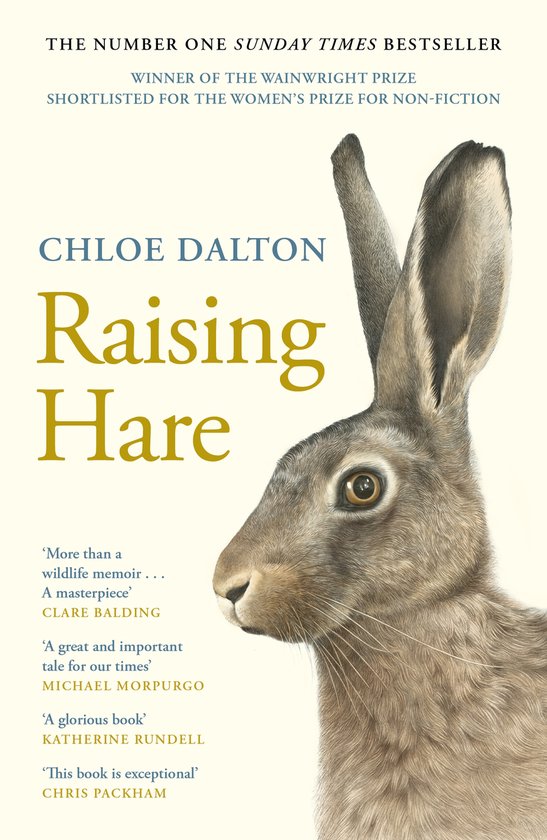 That is what makes Raising Hare by Chloe Dalton so special. It is not first and foremost the story of a woman who takes a wild animal into her home. It is the story of someone who tries to save a wild animal without taking away its wildness.