Inner freedom and our relationship with animals |
Some of our beliefs can harm animals
How people treat animals is connected with their psychological development. This article is about inner growth and inner freedom and what they mean for animals. Animal Freedom does not promote any particular philosophy of life, religion, organisation or political party.
Traditionally there has been a strong bond between religion, animals and food. People had reverence for the animal that was their food and said grace before a meal. Many people have spiritual experiences in free nature. Yet it is striking how few people searching for spirituality give any thought to the animal living in lonely isolation in a shed. Wrongly so, in our view.
Direct contact between people and farm animals has decreased, while meat consumption has increased. With it, the lack of freedom for animals has grown too. We would like people to take animals into account of their own free will and stop buying meat from factory farming. That brings closer the moment when factory farming can be abolished politically. |
What holds inner growth back?
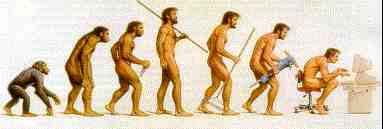 Our society does not make inner growth easy. Busyness, chasing a career and money, competition instead of cooperation, alcohol and drugs and the fear of missing out keep us away from ourselves. Advertising and the media show an embellished picture of reality and promise permanent happiness if you buy their product. Our society does not make inner growth easy. Busyness, chasing a career and money, competition instead of cooperation, alcohol and drugs and the fear of missing out keep us away from ourselves. Advertising and the media show an embellished picture of reality and promise permanent happiness if you buy their product.
It looks as if we are free, but some forms of freedom have become a new dependency. Under the guise of freedom, addiction grows, for example to fast food that tastes the same all over the world. And one person's freedom has become another's unfreedom, including that of animals. Besides ignorance and indifference, fear plays a part: freedom can even make people long for unfreedom.
Wisdom and insight come when you create space, an appropriate distance. In fact every person knows very well what he or she needs, if they take the time. Inner freedom means a life in balance, in which unwanted feelings also have a place and in which you set limits to yourself and to others. |
What inner freedom means
Inner freedom means that people expand their awareness. For how they treat others, humans and animals, this means that they:
- become aware of their influence on their surroundings and on the fate of animals;
- take responsibility for it;
- voluntarily restrain themselves and allow others the space this creates;
- develop compassion for others;
- feel at one with all living nature (see also dialectics);
- realise that the powerful have no more rights than others, human or animal;
- stand up for justice, against injustice and dare to set limits;
- stay modest and put their ego into perspective.
It is about finding a balance between opposing forces, such as keeping distance and being involved. By experiencing and using those forces, you rise above them. That is a paradox that works in practice.
Side track: respect is distance and involvement
Whoever wants to deal well with the freedom of others has to sense where their own freedom ends and someone else's begins. Only those who can control themselves can show respect. Respect is the combination of being involved and keeping distance: knowing when to keep your hands off. This self-control is voluntary. Eckhart Tolle puts it like this: animals live at a level prior to thinking; whoever rises above thinking meets them there again.
|
Side track: liberty, equality and fraternity
For animal rights we argue for the same principles that the French Revolution stressed for humans: liberty, equality and fraternity. In fraternity we see love and compassion. Whoever frees themselves inwardly can give love and compassion in a healthy way. People who do not feel free towards other people sometimes turn excessively to animals. The animal can then become the victim of an improper need for contact (see also attachment).
Side track: Maslow's hierarchy of needs
Psychologist Abraham Maslow arranged the conditions for self-development in a pyramid. Only when the lower needs are met do people get round to the higher ones:
- physical needs: food, drink, sleep and warmth;
- safety and security;
- social needs: love, friendship and belonging;
- recognition and self-respect;
- self-actualisation.
High work pressure and insecurity hold back self-development. Vulnerable others, such as children and pets, then risk being neglected.
|
What do animals notice of inner freedom?
Compassion for animals means allowing yourself to feel emotions when you imagine the fate of animals. The point is not to be weighed down by pity, but whoever suppresses pity slows down their own development.
What animals notice:
- people eat less meat and certainly no meat from factory farming;
- people put animals in a dependent position as little as possible;
- people become less indifferent to the fate of animals and actively look for improvement;
- those who do not want to lock up a pet choose to refrain rather than to act.
In society, we want economic benefit to be increasingly decoupled from the use of animals for food, experiments and other purposes. We believe a society is possible in which the emancipation of animals goes so far that no animal is used anymore. When that goal will be reached is less interesting than what brings it closer. |
|
|
|
