Freedom is a valuable paradox

Freedom does not exist without limits

Freedom is an abstract concept. You can compare it with a hole in a wall. A hole is nothing in itself: it is defined by the wall around it. No wall, no hole. In the same way, freedom becomes clear mainly through what it is not.

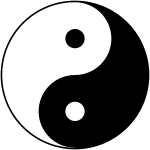
That is why freedom can be seen as a paradox: a statement that seems to contradict itself. Freedom cannot exist without its opposite, unfreedom:

  • you are forced to make choices, otherwise you cannot move on;
  • you have to set limits to others, otherwise they infringe on your freedom;
  • what freedom is can sometimes only be made clear by what it is not.

Every choice narrows your options, but it also opens new paths. Whoever accepts this actually gains freedom.

Equal worth of humans and animals

One well-known paradox is: "Life has no meaning". That thought can make you gloomy. You can also see it as an opportunity: you are free to give your life its own meaning. From this follows equality. No one is worth more in advance because of a quality that would be more valuable in the light of some particular meaning of life. This applies to people among themselves, but also to humans and animals. The life of a human being cannot objectively be shown to be more valuable than that of an animal.

Freedom, animals and nature

Freedom also extends to animals and to nature. In their culture, people try to rise above nature, but free nature keeps appealing to us as an example. Animals do not worry about paradoxes or the meaning of life. They only gather what they need to survive, such as food and nesting material.

Many people deny animals rights because humans supposedly stand above animals. A higher position is in itself no argument for denying others their rights. Animals may even have qualities that people envy: loyalty, naturalness, a carefree life. An animal does not lie and is not arrogant.

In free nature animals stay fit to escape their predators. This keeps nature sharp and, together with genetic variation, drives evolution. Where nature can develop undisturbed, it is a source of beauty and spiritual experience for people. Freedom is central to creation.

Defining concepts by what they are not

yin and yang

Concepts such as quality, freedom and love are often deliberately left vague. That makes them elusive, but also workable. It is no coincidence that the most basic rule of ethics is phrased negatively: "do not do to others what you would not want done to yourself". By describing what you should not do, room is left for what is allowed.

The same goes for animal welfare. Lay down in law what threatens the welfare of animals and prohibit it. Then the responsibility for their care lies where it belongs: with the farmer or the pet owner.

Freedom calls for a duty of care

Freedom does not sit well with duties. Yet the duty to respect the freedom of others is no contradiction. It is a paradoxical but useful feature of freedom. There is no reason whatsoever to exclude animals from the right to freedom. Humans structurally threaten the living space of animals on earth. In doing so, they have taken on a duty of care to guarantee the freedom of animals.

Read more about how these concepts are connected in the article on dialectics.