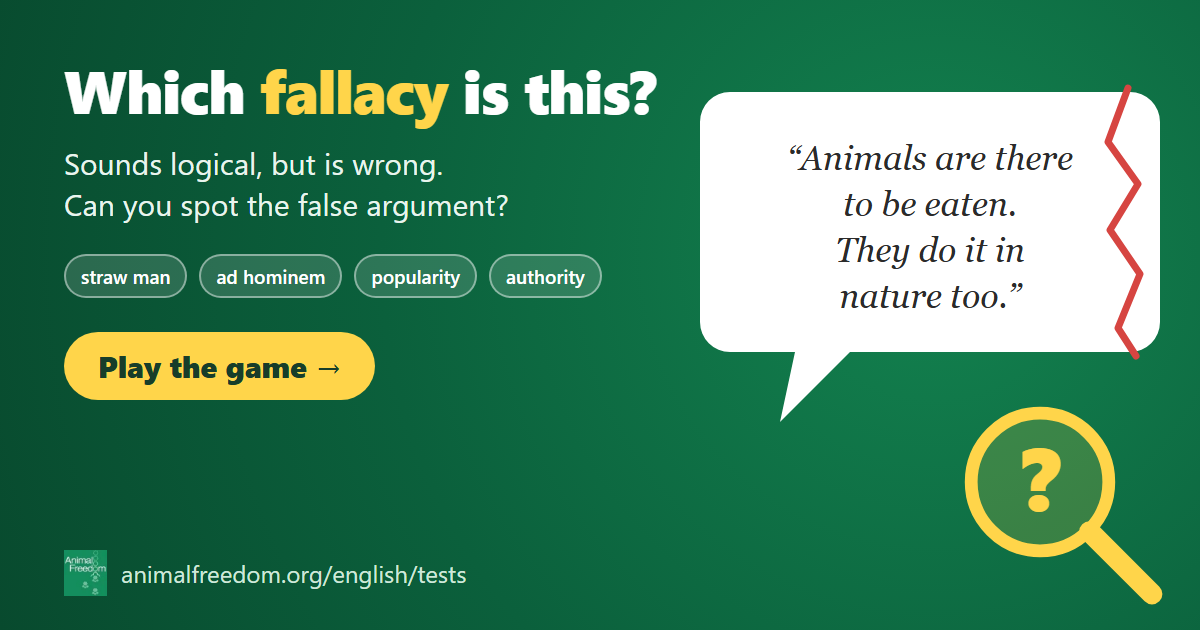
Much animal suffering is linked to old beliefs
Untruths about animals have been passed on for centuries. They are persistent because they are convenient: whoever believes that an animal feels no pain, has no awareness or simply exists for humans, can use it with a clear conscience.
Using animals is not the problem in itself. The problem begins where use turns into abuse and where knowledge about animals gives way to fallacious reasoning that justifies that abuse. That is why this page is part of our series on fallacies and demagogy.
This question is more topical than ever. In theory, the need to use animals has disappeared: we know how to eat a healthy plant-based diet and people often take a pet for the wrong reasons. What remains is habit, convenience, economic interest and the old untruths that keep them going.
From knowledge to abuse
This is how it slides, step by step. An example:
- Knowledge
A cow cares for her calf and calls out when it is taken away
- Belief
That’s just ‘maternal instinct’
- Untruth
An animal doesn’t really feel what a human feels
- Fallacy
She’ll soon forget, so there’s no harm Types of fallacies →
- Abuse
Calves are routinely taken from their mothers shortly after birth Read more →
use with knowledge of the factsabuse, justified by an untruth
The tipping point: as soon as an untruth reasons away the animal’s interest, use becomes abuse.
Animal Freedom wants to expose untruths that cause or maintain animal suffering. Some examples of these "untruths" follow. For each one we show what we know and which fallacy lies behind it.
“Children grow big and strong from eating meat” What we know: Children also grow up healthy without meat. The image comes mainly from meat industry advertising. Fallacy: Appeal to authority Read the article →“Animal testing is necessary for the development of medication” What we know: Results of animal tests often do not translate well to humans. More and more animal-free methods are available. Fallacy: Appeal to authority Read the article →“Meat (protein) is a healthy and necessary part of your diet” What we know: The body does not need protein itself, but its building blocks (amino acids): protein is first broken down in the gut. Plants contain the same building blocks; eat a varied plant-based diet and you get them all. Fallacy: Evasion of evidence Read the article →“Animals lack something humans have” What we know: Animals know pain, fear, emotions, relationships and awareness. Not saying it in words does not mean they do not feel it. Fallacy: Appeal to ignorance Read more on this page ↓
Is man superior to animals?
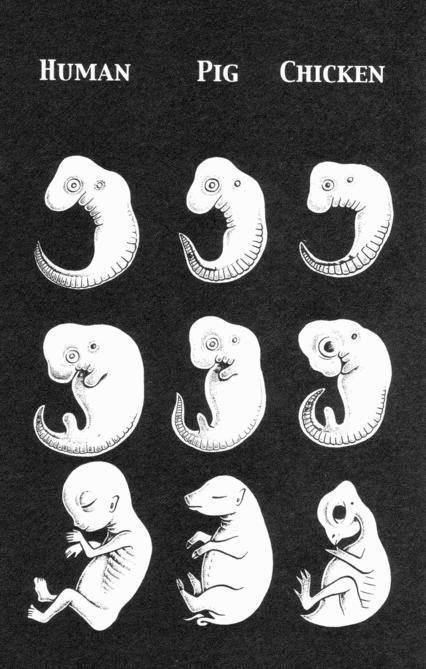 In our history the capacities of animals, discussed below, have been "reasoned away" by people who found it necessary to place people above animals. From this self-constructed position they could justify their immoral behavior toward animals. They would not have this justification if they had to recognize that people are basically a species of animal. In our history the capacities of animals, discussed below, have been "reasoned away" by people who found it necessary to place people above animals. From this self-constructed position they could justify their immoral behavior toward animals. They would not have this justification if they had to recognize that people are basically a species of animal.
Now that humans really no longer need the submission of animals for their own survival, and are still maintaining it to reap economic benefits, it's time to give back to animals what was taken from them: to be equal habitants of this planet, with the same rights we allow ourselves.
Pigs are more intelligent than dogs, but does that matter?
Do animals have properties such as: intelligence, awareness, pain, language, responsibility, and self-control? Do animals have relationships, do they have feelings like nervousness, love, anger, guilt, fun, sorrow, fear? Can animals stand up for themselves? Do they dream? Can animals think?
 Nobody can deny that animals possess most of these traits, and for other traits we have thought up different names, so that they appear to be different. The affection and care a mother displays for her offspring is called "instinct" in animals, as if to say that animals, like some sort of machines, "display maternal behavior". Don't be misled: animal behavior toward their offspring is characterized by almost all the same things as human behavior. Nobody can deny that animals possess most of these traits, and for other traits we have thought up different names, so that they appear to be different. The affection and care a mother displays for her offspring is called "instinct" in animals, as if to say that animals, like some sort of machines, "display maternal behavior". Don't be misled: animal behavior toward their offspring is characterized by almost all the same things as human behavior.
Anglers mistakenly justify their animal abuse by denying that fish can feel pain, fear or stress. |
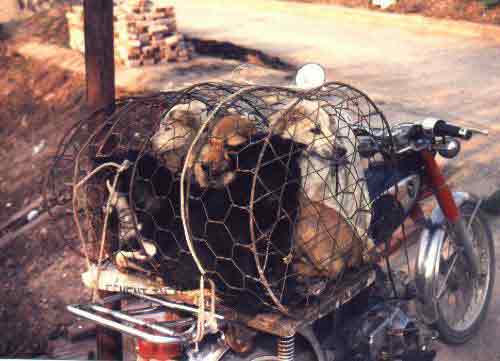
Dog meat trade in Asia
 In the following text we will (briefly) touch upon the prejudice that animals lack certain qualities that people have. In the following text we will (briefly) touch upon the prejudice that animals lack certain qualities that people have.
5 dogs on their way to the market where they will be sold to people who will butcher and eat them.
In Asia (China, Korea, Vietnam) people have always kept dogs for consumption. Lately this practice has started to assume factory-farming-like proportions. For them this practice is just as normal as eating pigs is for us. How do you recognise fallacies and respond to them? → |